
The Technical Fieldcraft AI Readiness Assessment Is Live
After months of work and review, we are pleased to announce that our assessment tool is now available. Read on to learn why you should do an assessment for your organization today.
Adopting AI in your organization, without first evaluating your foundational readiness, is an expensive gamble. Most enterprise AI initiatives do not fail because the underlying models are inadequate; they fail because teams deploy them on fragmented data, vague workflows, and undefined governance. An hour of planning can save you significant hassles later.
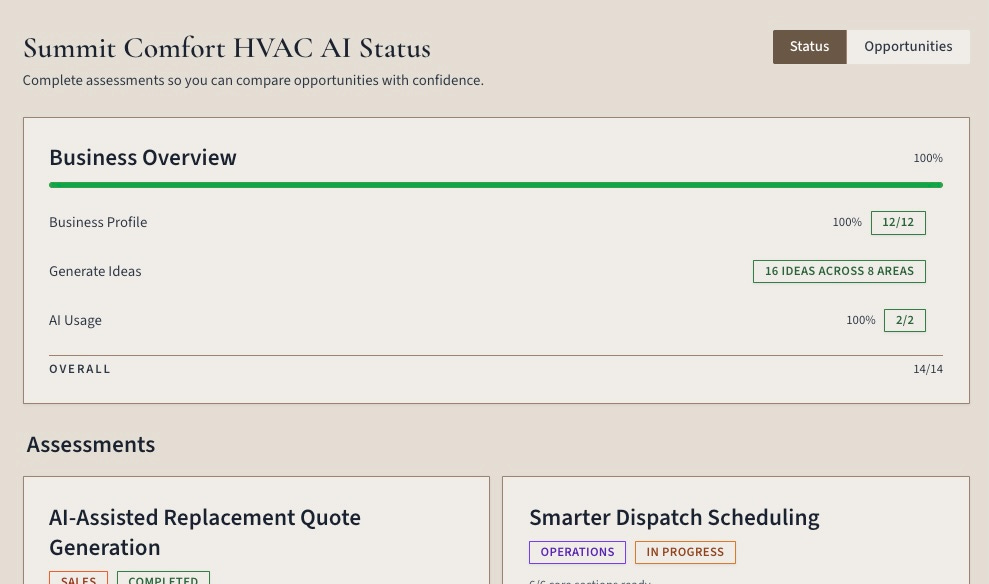
We launched the AI Readiness Assessment at assess.technicalfieldcraft.com to make this planning easy. Step by step checklists help you create a business profile. Open-ended input helps you to identify and track current AI usage (approved or otherwise). The resulting report will give leadership teams a clear, objective diagnostic of their operational and technical baseline before committing capital. But this is just the beginning.
Once you have a list of areas to formalize, or to invest, you have the chance to do the next level of planning: an opportunity assessment.
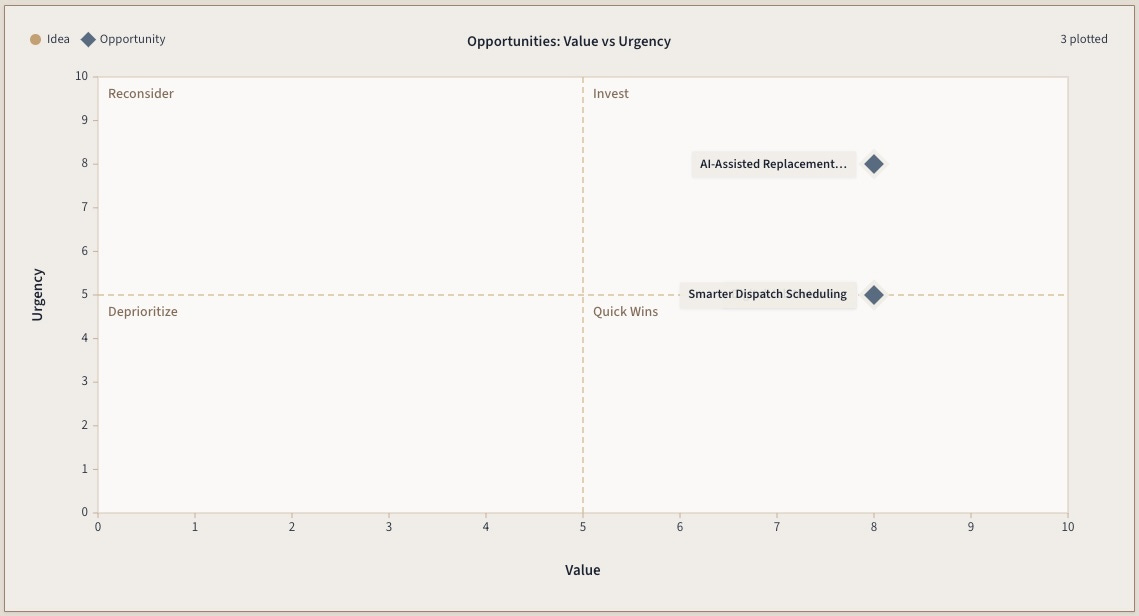
Qualify your ideas, prioritize them, and chart them on a grid to see which are most important, and most urgent, for your business needs. Once identified, perform a full, step-by-step assessment to identify all of the areas of concern. This simple, but thorough, checklist approach will help you to see which areas deserve more attention and planning before you spend your hard-earned capital.
The Risks of Skipping the Assessment
Moving straight into vendor selection or custom development without establishing a readiness baseline can introduce severe, preventable risks:
- Sunk Capital on Unusable Pilots: Building custom tools or buying expensive software layers on top of unstructured, inaccessible data produces proof-of-concept projects that can never reach production.
- Operational Exposure: Exposing internal data to external models without verified access controls, permission structures, and governance leads to regulatory and security liabilities.
- Team Fatigue and Friction: Forcing AI tools into poorly defined business processes creates operational friction, leading to low adoption rates and internal skepticism.
What You Gain by Assessing First
Running a structured diagnostic before execution shifts your approach from speculative experimentation to targeted deployment:
- Clear Bottleneck Identification: Pinpoint exactly where your stack falls short—whether in data cleanliness, API integration, infrastructure, or operational oversight.
- Pragmatic Resource Allocation: Direct engineering hours and budget exclusively toward resolving structural gaps that actually block deployment.
- Defensible Decision-Making: Equip executive stakeholders with an unvarnished, data-backed rationale for where to invest, what to fix, and what to defer.
The Advantage of Acting Quickly
The window for gaining a competitive edge through basic AI adoption is closing: you cannot assume your competitors are standing still. But moving fast does not mean moving blindly. Acting quickly with a clear baseline provides distinct advantages:
- Faster Time-to-Value: Organizations that resolve underlying data and process blockers early deploy production-grade tools months ahead of competitors stuck in endless pilot loops.
- Cost Efficiency: Identifying structural prerequisites up front prevents expensive mid-project retrofits and abandoned software contracts.
- Sustainable Scalability: Building on a tested baseline ensures that early AI wins can be replicated across other departments without rebuilding infrastructure each time.
Get Your Baseline
Evaluate your organization’s AI readiness in just a few minutes at assess.technicalfieldcraft.com.
Found this useful? Subscribe to get more field notes in your inbox.
Subscribe on Substack